
Denisa spills the beans about newsletters
File under: What Denisa revealed to our Jan. 29 audience
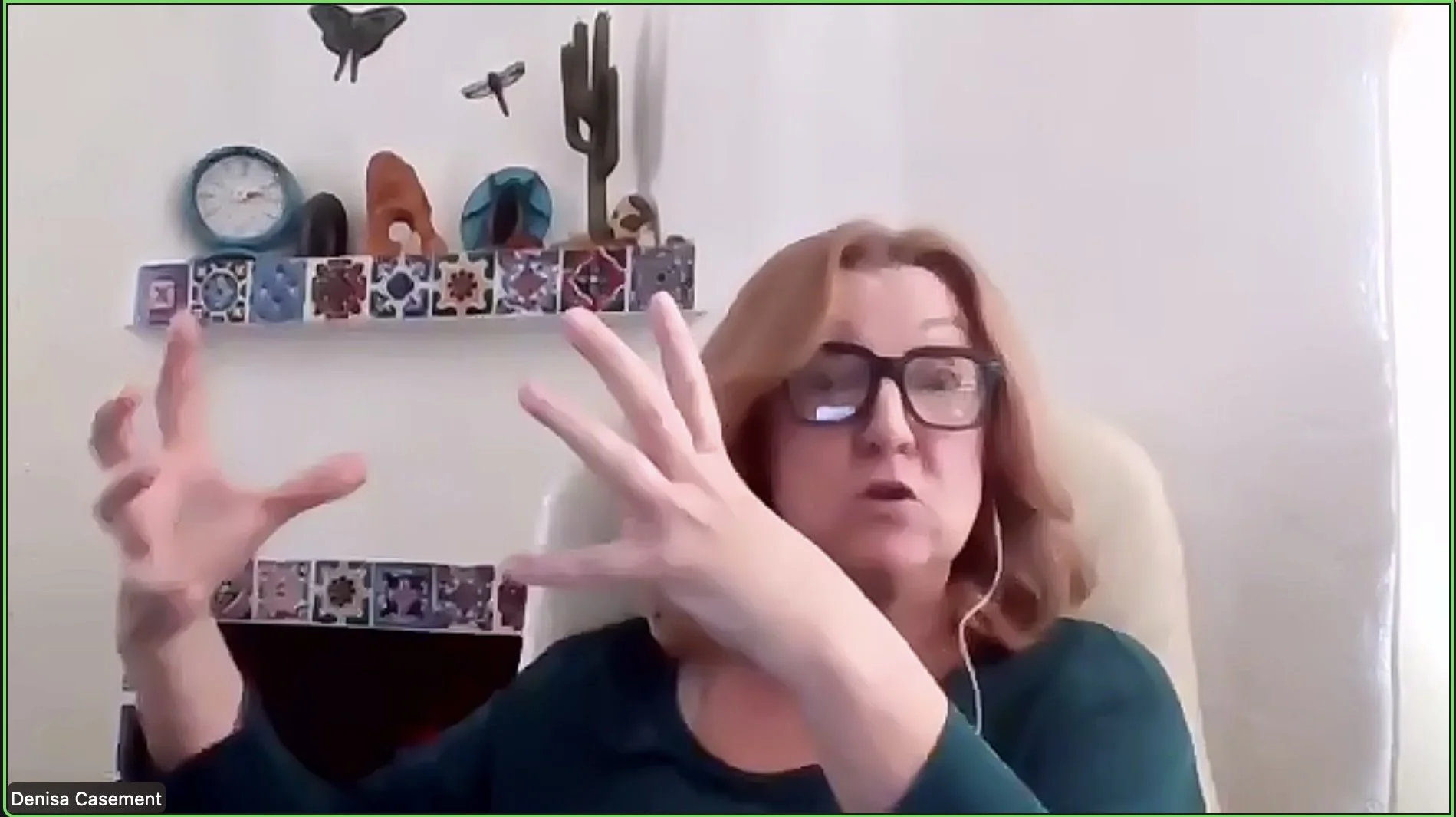
She answered dozens of fundraisers' practical wonderings during the webinar's "all you can eat"™ Q&A • so of course I scribbled pages of notes, listening to this uniquely-qualified, front-line practitioner (+master strategist with an unbeatable track record for raising money) share little-known data, while spitballing good advice to charities of all sorts, her hands flying like squirrels...
What gems did I capture?
Read the article below.
Denisa Says Stuff Worth Knowing
Print donor newsletters from local charities get stronger response rates than those published by the biggies. Denisa has seen a 17% response rate for a local charity's donor newsletter. Repeat: almost 1 in 5 of those receiving this local charity's newsletter then made a gift as a result.
That is unimaginably rich. Yes, she was using a world-class writer/ designer team. But this was religiously "old school," too: Denisa relies on the money-making Domain Formula for donor newsletters, developed during the 1990s in Seattle, when the internet was still in diapers.
------
What's a typical response rate for a print donor newsletter? A moonshot of 17% response is rare. More typically, in the U.S., Denisa consistently lands a 6-8% giving response from the "warm" segment of a charity's list; maybe slightly higher for her offshore clients. That's her goal each issue. Charities in Australia, Ireland, Germany and Italy also do routinely well with print donor newsletters.
Incidentally, Denisa defines a "warm segment" as just those donors who've given in the past 12 months, a cut-off recommended by the Domain Formula. If it's peak giving season (Nov.-Dec.), though, she might "go deeper into the file" and expand a print newsletter's mailing to include "lapsed" donors (SYBUNTs).
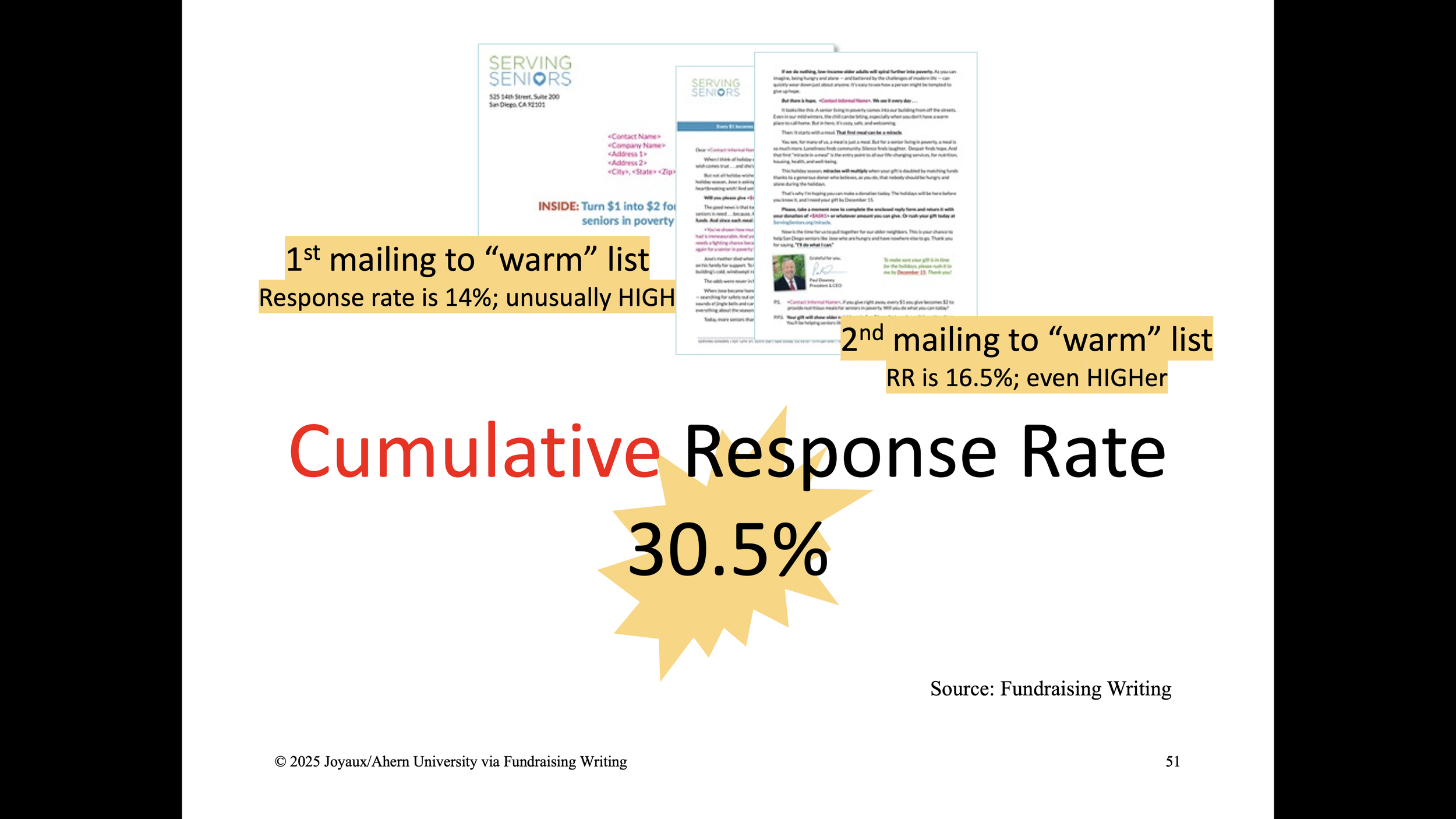
Above: The "warm" part of your list is where you raise the real money. This direct mail appeal from the Coopers accumulated an outsize 30.5% response over two identical mailings.
------
A newsletter is NOT itself an ask. It's principle job is to report to your base about the impact of their giving: What exactly did the readers' pooled generosity achieve in the real world? Front-line stories will be your primary language, with statistical verification being nice but not necessary.
A newsletter can contain soft asks, though. The 1990's Domain Formula, still a workhorse in 2026, specifies tucking a reply device into your outbound envelope (OE); so that's at least an "implied ask." Denisa's own reply devices are "flattery heavy." She slathers them with B.O.Y.—Because Of You—Jerry Panas' favored acronym.
------
Typical response rates for e-newsletters vs. print? In Denisa's vast experience, a properly done e-newsletter will draw gifts from 1-2% of your addresses. A print newsletter done well will draw a 5-8% response.
What is digital especially good at? "Digital is a fantastic acquisition tool, but it doesn't retain donors."
Denisa's formula for best e-newsletter results? Dirt simple: One good story + 1 good photo.
Her default comms' schedule annually for her clients? Eight comms optimal: 4 print newsletters, 4 direct-mailed appeals, integrated with companion emails and social posts. (Plus lots of thanks, all the time.)
What level of donor retention is enough? She shoots for a yearly average of 60% retention. Well-crafted donor comms are how her charity clients achieve that enviable retention standard.
------
For your demographic in-box: There's a new age-and-attitude descriptor in town: NEW-OLD. As in, "She's not old. She's new-old." Denisa Casement describes herself as "new-old." It's the same description she applies to core supporters, as a way of thinking about them. A "new-old" donor means someone "over 55 and informed."
------
AI had the day off. A human wrote the article above.

Dear Reader: This is an excerpt from Tom Ahern’s e-newsletter. Did you miss crucial back issues of this how-to e-news? Immediately available! Just GO here. (And scroll down just a bit to sign up for Tom’s revenue-boosting tips and insights. In your inbox regularly. It’s free.)